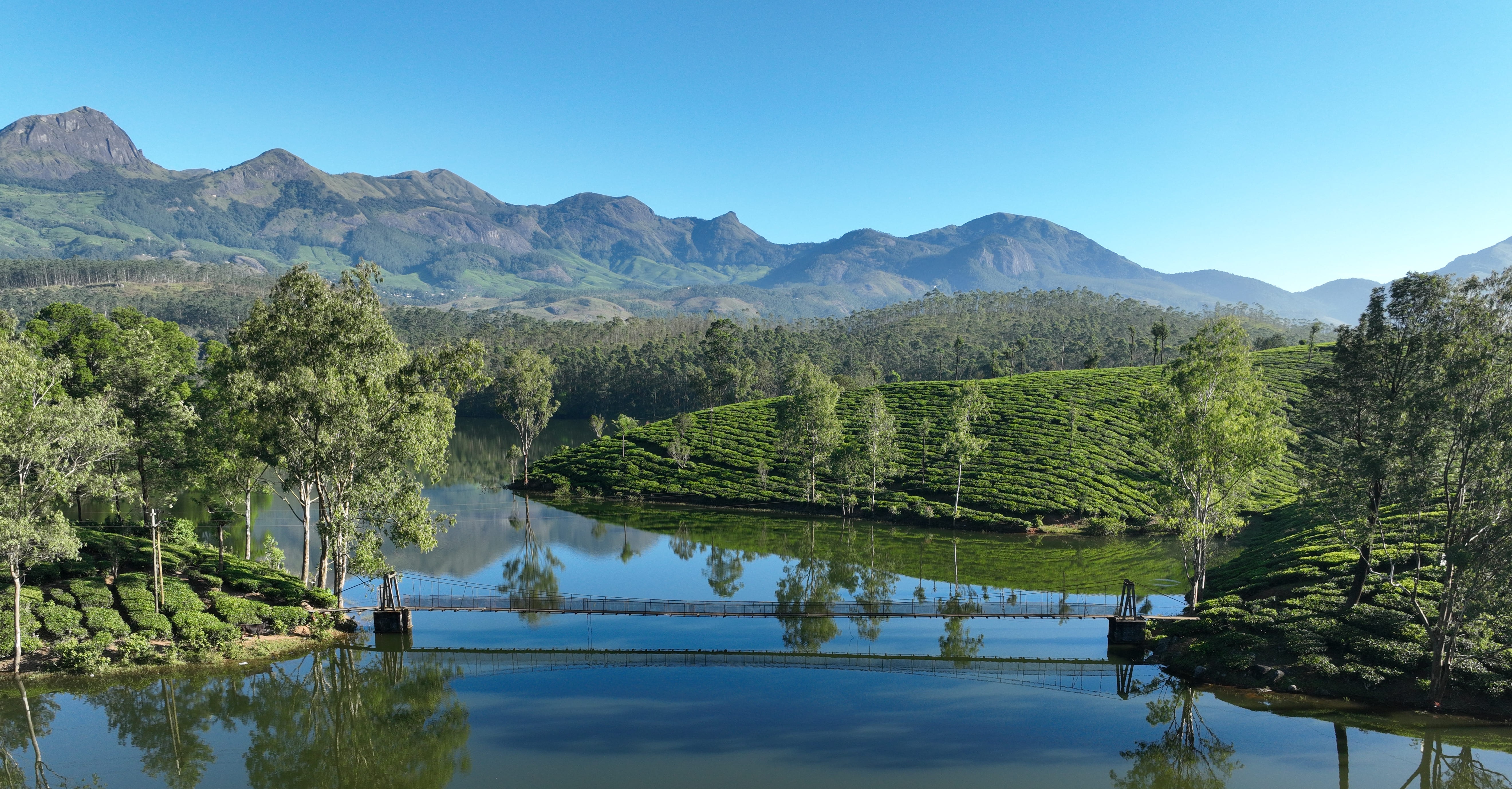
Located in Kerala’s Idukki district at an altitude of around 1,600 meters, Munnar is one of South India’s most famous mountain destinations. Tea plantations, forested hills, grassland plateaus, and constantly changing weather patterns attract travelers from across the country and beyond.
Munnar is often described as a hill station, but that label does not fully explain the experience. The region is vast, and travel here is influenced by elevation, protected ecosystems, plantation activity, and long distances between attractions. Understanding these factors helps visitors plan realistically and experience the region without feeling rushed.
This guide brings together the key places to visit in Munnar and the main things to do, while also explaining how to approach the destination in terms of pace, routes, and seasons.
Unlike compact tourist towns, Munnar spreads across valleys, ridges, and forest corridors. Roads are winding, viewpoints appear unexpectedly, and travel time is often longer than maps suggest.
A practical way to explore Munnar is to:
This approach usually results in a more relaxed and rewarding trip.
Munnar does not have an airport or railway station, and all access is by road.
Most travelers reach Munnar via Kochi (Cochin International Airport), which is about 120 kilometers away. The drive usually takes four to five hours and passes through forested stretches, waterfalls, and gradually rising terrain.
Coimbatore and Madurai in Tamil Nadu are alternative access routes, especially for travelers combining Munnar with destinations on the eastern side of the Western Ghats. These routes offer a noticeably different landscape as they approach the hills.
Road journeys in Munnar involve elevation changes and hairpin bends. Travel time varies by season, with monsoon months often requiring extra buffer time.

From national parks and tea estates to viewpoints and forest routes, there are several well-known tourist attractions in Munnar that shape the overall travel experience.
These attractions are spread across different elevations and landscapes, which is why travel time and route planning play such an important role in how much visitors can realistically see in a day. Exploring them as part of a route, rather than as isolated stops, often leads to a more relaxed and rewarding experience.
One of the most important places to visit near Munnar is Eravikulam National Park. The park protects high-altitude grasslands and is home to the endangered Nilgiri Tahr.
Visitors enter through a regulated bus system designed to protect the terrain. The experience focuses on observation rather than activity, offering open views, rare vegetation, and wildlife sightings. The park typically closes between January and March during the Nilgiri Tahr breeding season.
Tea plantations define Munnar’s identity. Introduced during the colonial period, tea cultivation reshaped settlement patterns, road layouts, and local livelihoods.
Walking through estate areas or visiting a tea museum helps travelers understand how deeply tea is embedded into the region. Tea gardens are not just scenic viewpoints; they are working landscapes that explain why Munnar looks and functions the way it does.
Located above 2,000 meters, Kolukkumalai Tea Estate is often cited as the world’s highest tea plantation. Access is only by jeep, with rough mountain tracks forming part of the journey.
From the top, views extend across the Western Ghats into Tamil Nadu on clear days. Visibility depends heavily on weather conditions, especially during sunrise visits. Kolukkumalai also offers insight into traditional tea production methods that remain in use today.
Many of Munnar’s waterfalls appear along travel routes rather than as isolated destinations. Attukad, Cheeyappara, and Valara waterfalls are best experienced as brief pauses during drives rather than full-day excursions. Water flow is strongest after the monsoon, making these stops particularly striking during post-monsoon months.
Viewpoints such as Pothamedu and Lockhart Gap offer wide views of tea plantations and surrounding valleys. Visibility depends heavily on weather conditions, with clear views often lasting only briefly. Early mornings and late afternoons generally provide the best chances for unobstructed views.
The landscape east of Munnar changes noticeably. Chinnar Wildlife Sanctuary lies in the rain-shadow of the Western Ghats and features dry deciduous forests, scrubland, and distinct wildlife.
Nearby Marayoor is known for its sandalwood forests, prehistoric dolmens, and traditional jaggery production. This region offers a contrasting experience to central Munnar and is particularly appealing to repeat visitors.
Chinnakanal tourism has grown steadily in recent years as travelers look beyond Munnar town for quieter, landscape-driven experiences.
Located a short drive from Munnar town, Chinnakanal sits at a slightly higher elevation and is known for its expansive tea estates, open valleys, and quieter surroundings. While many travelers associate Munnar with the town center, Chinnakanal offers a different experience—one that emphasizes landscape, views, and slower movement.
The area is well placed for visiting Anayirangal Dam, forest corridors leading toward Chinnar, and several lesser-known viewpoints that are less crowded than those closer to town. Because attractions are spread out, spending time in Chinnakanal often reduces daily travel fatigue while offering uninterrupted views of tea-covered hills.
Beyond sightseeing, travelers often look for structured and fun things to do in Munnar, including nature walks, light trekking, and cultural experiences.
These activities help balance long drives and viewpoint stops, especially for visitors staying multiple days. Choosing a mix of movement and rest often makes the overall Munnar experience feel more complete.
Munnar offers walking and trekking options for different fitness levels.
Weather conditions and forest regulations influence accessibility. Planning ahead and using regulated trekking routes ensures safety and environmental protection.
Evenings in Munnar often include cultural performances such as Kathakali dance and Kalaripayattu martial arts. These are held at designated cultural centers and typically run for a short duration, making them easy to include after a day of sightseeing.
Munnar’s character changes through the year. Winter brings clearer skies and higher visitor numbers. Summer offers fewer crowds and comfortable temperatures, while the monsoon season transforms the region into a lush, mist-covered landscape with strong waterfall flow and limited trekking access.
Rather than focusing on a single “best” time, travelers benefit from aligning expectations with seasonal conditions.
The ideal stay depends on pace rather than coverage.
Even adding one extra day often improves the overall experience by reducing travel pressure.
Munnar lies within a sensitive mountain ecosystem where tourism, agriculture, and wildlife coexist closely.
Responsible travel includes:
These practices help preserve the region while maintaining meaningful travel experiences.
Munnar is not defined by a checklist of attractions. Its appeal lies in how landscape, altitude, weather, and agriculture interact across the hills.
Travelers who slow down, choose fewer routes, and allow time for unplanned moments often gain a deeper understanding of the region. Having a Munnar resort to go home to can be a way to have the region reveal itself gradually – whether you are watching clouds drift over tea slopes or pausing at a quiet viewpoint.
This guide serves as a central hub—a clear overview of the main places to visit in Munnar and the things to do, while allowing deeper exploration through focused guides on specific areas, seasons, and experiences.
Follow Us On


Drop your Queries
Adventure and Outdoor Activities
Attractions / Destination Guides
Culture and Cuisine
Travel Tips and Advice
Resort Facilities
Wellness and Ayurveda
Seasonal Highlights
Recent Post