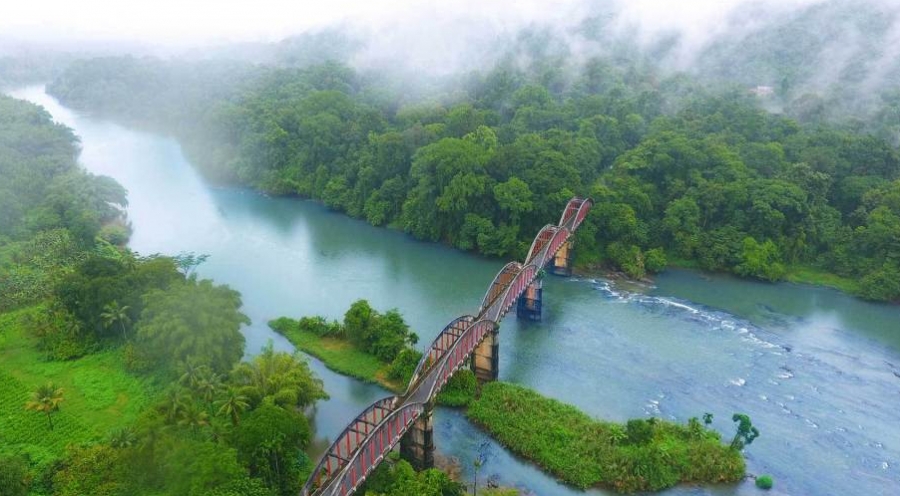
The endless green tea plantations covering Munnar’s hills are among the destination’s most recognizable sights. However, the story behind these plantations extends far beyond the scenery visible from the road. Tea cultivation influenced the development of Munnar, created estate settlements, supported transportation and power infrastructure, and shaped the livelihoods of generations of plantation workers.
The Munnar Tea Museum offers visitors an opportunity to explore this history. Officially known as the Kannan Devan Hills Plantations Tea Museum, or KDHP Tea Museum, it is also commonly referred to as the Tata Tea Museum. The museum documents the development of Munnar as a plantation town and presents the machinery, processes, and people connected to its tea-growing heritage.
For travelers interested in local history, agriculture, industrial heritage, or the journey behind a cup of tea, the museum is a valuable addition to a Munnar itinerary.
Munnar’s development as a tea-growing region began during the late 19th century. A. H. Sharp carried out one of the earliest tea-planting efforts in the region in 1880. Over the following decades, large areas of the high ranges were gradually developed into organized plantations.
Tea cultivation transformed Munnar from a remote mountain region into an important plantation center. Roads, estate offices, worker settlements, factories, transportation systems, and power-generation facilities were established to support the growing industry.
The Tea Museum was established by Tata Tea in 2005 to preserve and present this history. Around the same period, Kannan Devan Hills Plantations Company, commonly known as KDHP, succeeded Tata Tea’s plantation operations in Munnar. This transition explains why the attraction continues to be known by several names, including the Tata Tea Museum, KDHP Tea Museum, and Kannan Devan Tea Museum.
Today, the museum serves as a record of Munnar’s tea-growing heritage and the technological changes that influenced tea production over the years.
A visit to the Munnar Tea Museum combines historical exhibits, plantation artifacts, tea-processing information, and an introduction to the wider tea industry.
The museum houses old photographs, documents, records, and pieces of equipment associated with the development of Munnar’s estates. These exhibits help visitors understand how plantations were managed before modern machinery and digital systems became common.
Among the important displays are antique tea rollers, dryers, grinders, and other processing equipment. Visitors may also see a Rotorvane, a machine associated with the CTC method of producing tea. CTC stands for crush, tear, and curl, describing the mechanical process used to create small, uniform tea particles commonly used in strong black teas.
The collection extends beyond tea-processing machinery. Other exhibits include a Pelton wheel once used in an estate power plant, a large sundial dating to 1913, colonial-era furniture, typewriters, manual calculators, and objects connected to plantation administration.
One of the museum’s most unusual exhibits is an ancient burial urn discovered at the Periakanal tea estate. It is believed to date back to around the second century BC, offering a glimpse into the history of the region long before the development of commercial plantations.
Photographs of plantation workers, estate settlements, and earlier methods of transporting tea further illustrate how tea production influenced daily life in Munnar.
One of the most informative parts of the Munnar Tea Museum is its explanation of how freshly picked tea leaves are transformed into finished tea. Visitors are introduced to the main stages of production, including withering, rolling, oxidation, drying, and grading.
Through the museum’s displays and demonstration facilities, visitors can understand how each stage affects the tea’s color, aroma, strength, and flavor. This explanation adds greater meaning to the tea plantations seen throughout Munnar and highlights the work involved in producing every cup.
Visitors can add a tea-tasting session to their museum experience for ₹120 per person. The session introduces participants to the appearance, aroma, color, and flavor of different teas, helping them understand how tea is evaluated beyond simply taking a sip.
During the tasting, visitors can observe the dry and infused leaves, smell the prepared tea, and identify characteristics such as strength, body, aroma, and finish. No technical knowledge is required, making the session an accessible introduction to the different qualities of tea.
Visitors interested in tea tasting must arrive in the morning, as the session may not be available later in the day.

The Munnar Tea Museum is closed on Mondays. Admission is ₹150 per person, while ticket rates for children may vary and can be confirmed at the museum’s ticket counter. The tea-tasting session costs an additional ₹120 per person.
Most travelers can explore the museum in approximately one to two hours. This provides enough time to view the historical exhibits, learn about the tea-making process, examine plantation-era machinery, and participate in the tasting session without rushing.
The Munnar Tea Museum is located on Nullathanni Road at Nullathanni Estate, approximately two kilometers from Munnar town.
From central Munnar, the museum can usually be reached within a few minutes by taxi, auto-rickshaw, or private vehicle. Its proximity to the town makes it easy to include in a morning or half-day sightseeing plan.
Travelers arriving from outside Munnar generally reach the hill station by road. Cochin International Airport is approximately 110 kilometers from Munnar, and the journey commonly takes around four to five hours depending on traffic, weather, and road conditions.
Aluva, Angamaly, and Ernakulam are among the practical railway gateways for Munnar. Buses and taxis are available from Kochi, Aluva, and Ernakulam, although travelers should allow sufficient time for the winding journey through the hills.
Travelers arriving through Aluva can also learn more about the history and attractions along the Aluva to Munnar route before planning their journey into the hills.
A morning visit is ideal, especially for travellers interested in tea tasting. Arriving early allows enough time to explore the museum at a comfortable pace while keeping the rest of the day available for other attractions.
Follow Us On


Drop your Queries
Adventure and Outdoor Activities
Attractions / Destination Guides
Culture and Cuisine
Travel Tips and Advice
Resort Facilities
Wellness and Ayurveda
Seasonal Highlights
Recent Post